Los Angeles can go six dry months without a drop, then take a week of atmospheric rivers that soak the ground and overwhelm gutters. That on-off pattern punishes yards. When soils swing from baked to saturated, they shed water. When water does not have a safe path, it looks for the lowest point, which is often a patio edge, a crawl space, or the back door. We have been called out after nights when 3 to 6 inches fell across the basin, sometimes more in foothill microclimates, and the difference between a wet garden and a flooded family room came down to slope, inlets, and one clogged grate.
Flood prevention is not a single product. It is a system, built in layers. Below is how we design and phase that system, based on decades of fixing soggy lawn corners, draining pool decks, stabilizing hillside properties, and hardening outdoor living spaces that still need to breathe during a storm.
Why this matters for Los Angeles yards
Clay-rich subsoils are common across the county, especially on cut-and-fill lots and older neighborhoods with compacted backfill. Those clays absorb slowly, then hold water near the surface. Add the region’s love of flat entertaining spaces, low curb profiles, and driveway slopes that pitch down toward garages, and you get textbook ponding. On hillsides, the stakes climb fast. If a slope saturates and loses shear strength, panels of soil can creep or slump. Retaining walls without proper back drains turn into dams.
The choices you make for drought, comfort, and curb appeal affect flood resilience. Permeable pavers ease runoff. Artificial turf drains better than compacted sod but worse than a well built rain garden. A covered patio changes how much water reaches the ground. The trick is to tie these pieces together so your yard handles June heat and January downpours.
A field-tested roadmap, from quick wins to engineered fixes
We like to move from diagnosis to durable solutions in clear phases, so homeowners can act before the forecast turns gray. The sequence below keeps you from skipping the inexpensive steps that often solve 70 percent of the problem.
- Assessment and mapping Immediate pre-storm tune up Grading and surface water controls Subsurface drainage and storage Long term maintenance and monitoring
Assessment and mapping
Walk the property the morning after a light rain. That is when rills, puddles, and stains draw a map for you. Note the true high points and low points, not what the plan says. Watch where water crosses hardscape joints. Look at the base of fences, where neighboring water might enter. On driveways, follow the fall. A grade of 1 to 2 percent is ideal across patios, with 2 percent sometimes necessary on softer surfaces to overcome surface tension.
If you have never measured your slope, a 4 foot level and a tape will do. Lift one end of the level off the surface until the bubble centers, measure the gap, divide by the 48 inch run. A 1 inch lift means about 2 percent. If you get zero, water will sit.
We also test infiltration. Push a 6 to 8 inch diameter ring or a bottomless bucket 3 inches into the soil, fill with water, and time how long it takes to drop an inch. Under 30 minutes per inch is sandy to loamy and forgiving. Over an hour per inch is slow, which calls for bigger storage or more surface flow paths. If the water stays for hours, plan on subdrains.
Finally, confirm utilities. Mark gas, electrical, and irrigation. Any trench deeper than a foot in older neighborhoods can find surprises. We once uncovered an undocumented clay drain laid in the 1950s, still passing the neighbor’s roof water toward a driveway. That explained the chronic flooding, and it forced a rethink of the discharge path.
Business Name: Ridgeline Outdoor Living
Address: 845 E Walnut St, Pasadena, CA 91101, United States
Phone: (626) 469-5822
Ridgeline Outdoor Living
Ridgeline Outdoor Living is a Pasadena-based landscape design-build company serving Greater Los Angeles with custom outdoor living, hardscape, and drought-tolerant landscape solutions. The company specializes in patios, retaining walls, outdoor kitchens, drainage, hillside projects, and turnkey landscape construction, handling projects from design and permitting through final build and warranty.
845 E Walnut St, Pasadena, CA 91101, USA
Business Hours:
- Monday – Saturday: 8:00 AM – 6:00 PM
- Sunday: Closed
Follow Us:
Immediate pre-storm tune up
The fastest wins often cost the least. We have saved homes from a wet night with a five minute fix to a clogged curb core or a channel drain filled with bougainvillea petals. Before a significant system arrives, run a short checklist.
- Clear debris from gutters, downspout outlets, and all surface grates Check pop up emitters and curb cores for roots or sediment Reattach downspout extensions and redirect drains away from foundations Pull mulch back 2 to 3 inches from door thresholds and weep screeds Walk the property at dusk to spot low spots and adjust sandbags if needed
That list is dull, and it works. One Beverly Grove client avoided interior damage during a six inch week by discovering that a single popped downspout elbow was blasting a planter next to their slab. A $9 fitting changed the flow.
Grading, swales, and where water belongs
Grading is your first engineered layer. When the ground is shaped correctly, you lean less on pipes and pumps. We prefer broad, shallow swales lined with turf, groundcovers, or river rock, sized to carry peak flows without scouring. In the flats, an asymmetrical front yard can hide a swale in a planting bed that looks like a dry creek. Set the bottom at least 4 to 6 inches below adjacent grades, maintain positive fall to a safe discharge, and keep the sides gentle to mow.
Turf choice matters. Artificial turf drains quickly through the perforated backing, around 30 inches per hour in many products, but only if the base underneath is open graded. If the installer used fines or compacted too tightly, water will skate across the surface and collect at hardscaping services Pasadena seams or borders. For real grass, a healthy loam with dethatched thatch will take in an inch per hour when aerated, but compacted sod over subgrade can drop below a quarter inch per hour. If you are weighing Artificial Turf vs Sod: What’s Best for Los Angeles Homes?, add storm behavior to the list. Turf over a permeable base makes a great swale floor. Sod can work too, but plan for annual aeration to keep it breathing.
Edges define performance. Where a swale meets a paver patio, install a discrete slot or channel drain to intercept overflow. For driveways, a trench drain at the threshold, sized with a steel or polymer grate rated for car loads, often saves the garage. We have refined these details through projects that also prioritized aesthetics, including 15 Driveway Paving Ideas to Improve Curb Appeal and 15 Paver Patio Designs Los Angeles Homeowners Love. A clean grate aligned with the paver joint reads intentional, not like an afterthought.
French drains, explained without the mystery
The phrase gets tossed around, often as a catch-all. A French drain is a gravel filled trench with a perforated pipe at its base, wrapped in fabric to keep fines out, designed to intercept groundwater and move it. It does not collect surface water unless you connect inlets. Its job is to lower the saturation level in a zone, to cut off a seep, or to relieve pressure behind a wall.
Sizing depends on the length of run, soil infiltration, and the contributing area. In a typical Los Angeles yard with moderate clay, a 12 to 18 inch wide trench at 18 to 24 inches deep, sloped at 1 percent to a discharge, provides a meaningful path. The pipe should be rigid PVC with perforations down in a gravel bed, not corrugated, which sags and silts. We specify a nonwoven geotextile sock around pipe and stone to reduce clogging.
The best use cases are consistent. At the toe of a slope that weeps for days after a storm, under a lawn that sits wet, or behind a retaining wall as a backdrain. Where homeowners demand a primer, we point them to the logic behind French Drains Explained: Protecting Your Property From Water Damage. The punchline is simple. Get the water off the surface first with grading and inlets, then use French drains to handle what the eye can not see.
Dry wells, seepage pits, and on site storage
If your soils can absorb but slowly, you may need a place to hold water while the ground catches up. Dry wells and seepage pits fill that role. A dry well is a lined or unlined chamber filled with rock, prefabricated plastic modules, or a concrete vault, sized by expected runoff. It accepts flows from roof leaders, channel drains, and French drains, then meters them into the soil.

Residential pits often range from 50 to 200 cubic feet. As a rough rule, one inch of rain on 1,000 square feet of roof collects about 620 gallons, around 83 cubic feet. On many lots we split flows between two chambers to spread infiltration and hedge against one location’s slow spot. If your percolation test is under half an inch per hour, we mix infiltration with controlled discharge to a curb core to avoid backing water into the system. In some jurisdictions you can not tie into the street without permits. In Los Angeles, always confirm with the Bureau of Engineering or your city counterpart.
Placement matters. Keep pits 10 feet off building foundations, 5 feet off property lines where codes require, and higher than the seasonal high water table. Do not put them under heavy tree roots. We have excavated pits plugged by fine roots that grew through tiny seams to feast on the wet gravel inside.
Hardscapes that help, not hinder
The most popular patios in this region live a double life. They need to look refined for dinners in October, then act like a drainage field in January. That tension drives material choice. Paver Patios vs Stamped Concrete: Pros and Cons reads one way in summer and a different way under a storm. Pavers, especially permeable systems with open joints and a graded aggregate base, pass water through to the subgrade. Traditional mortared flagstone or stamped concrete sheets the water across the surface, which means you must collect at edges or integrate surface drains.
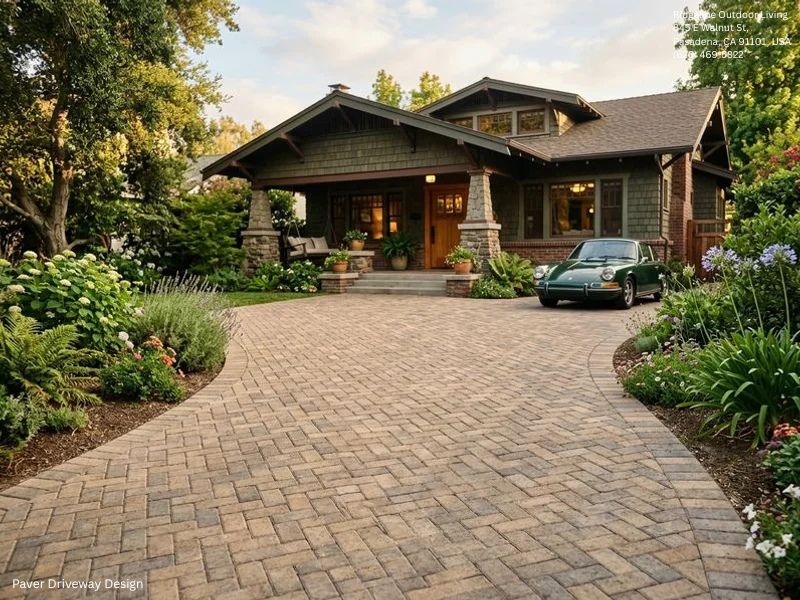
On driveways, the choice is similar. Permeable paver systems can accept several inches per hour if the base is built to spec. If you favor traditional concrete, cut deliberate fall across the slab, direct to an inlet sized for the flow. The Most Popular Driveway Materials in Los Angeles all have a place, but they need detailing to avoid ponding. We lean toward concrete with decorative saw cuts and integrated trench drains at garage thresholds for homes with very flat lots. For hillside driveways, a permeable system with interceptor drains along the uphill edge often controls sheeting water coming off the slope.
Around outdoor kitchens, always think about grease and water together. A long counter with a toe kick makes a small dam during a storm. Set the slab with fall to a stainless channel just upslope of the island. For homeowners weighing How Much Does an Outdoor Kitchen Cost in Los Angeles?, add a line for drainage on your spreadsheet. A 20 foot channel, a few inlets, and a tie into the main line might be less than 5 percent of the total, yet it determines whether that kitchen stays dry.
Retaining walls and hillside discipline
Walls have a memory. If water saturates the backfill and can not leave, hydrostatic pressure builds and forces movement at the joints or base. We insist on backdrains behind every wall that holds soil, even short ones. The assembly is standard for us. Filter fabric against the soil, clean 3 quarter inch gravel at least 12 inches thick, a perforated rigid PVC pipe at the base with a 1 percent slope to daylight or a sump, and weep holes set low so that any excess can escape under extreme storms. Where the wall steps into a slope that collects water, we add vertical drains up the wall height.
Homeowners sometimes ask, will a wall keep my slope from moving? Retaining Walls for Hillside Properties: What Homeowners Need to Know is that walls manage geometry and local stability, but they do not fix saturated soils above. Combine walls with slope drains, stabilized planting, and controlled irrigation. On many hillside jobs, we reduce irrigation by 20 to 40 percent after the first season and swap spray heads for drip that does not soak the face of the slope. That alone can reduce nuisance seeps after storms.
Planting for infiltration and control
The Ultimate Guide to Drought-Tolerant Landscaping in Los Angeles frames water wise design as a summer project, yet the same palette can help during storms. The Best Drought-Tolerant Plants for Los Angeles Yards include deep and fibrous rooters that hold slopes and open soils. Think carex, deer grass, manzanita, toyon, yarrow, and ceanothus on sun slopes. In bioswales and low pockets, use rushes and sedges that can sit wet for a day or two, then go dry for months.
Mulch is both friend and foe. At 2 to 3 inches, it slows raindrop impact, limits crusting, and increases infiltration. Piled 4 to 6 inches against a stoop, it turns into a sponge that pours into a threshold. Keep a crisp edge at doors, utilities, and path transitions. In rain gardens, choose coarse bark or rock that will not float away. In fast conveyors, like a swale that carries roof runoff, fix rock check dams at intervals to slow flow and drop out silt. Those check dams also interrupt small rills that can start under a long storm.
Pumps, power, and the last resort
Most yards can be fixed with gravity. On some lots, the only low place available is not at the curb, it is a back corner. Then a sump pump, set in a basin with redundant power, becomes necessary. We specify external rated pumps with vertical floats to reduce snags, a check valve on the discharge, and a protected line to a legal outfall. If your area loses power often, a battery backup or a small generator keeps the system alive through the peak of a storm. Test pumps every fall. We replace floats and worn impellers on a schedule, not after a failure.
What you can not do, in most cities, is discharge across a sidewalk or into a neighbor’s property. That creates liability. Apply for a curb core permit or work with a landscape contractor who understands local rules. Why Professional Landscape Design Saves Time and Money is not abstract here. A denied curb core the week before a storm limits your options to temporary measures.
Maintenance that keeps the system awake
Most drainage failures are not design failures. They are maintenance lapses. Plant litter, roof grit, and soil fines try to clog every opening. We write maintenance into every design so there is no guesswork. At a minimum, clear inlets before the first fall storm, after the first heavy leaf drop, and after any system that exceeds 2 inches in 48 hours. Lift catch basin grates and scoop out sediment when it hits 25 to 50 percent of the sump depth. For permeable pavers, vacuum and re-sand joints every two to three years, or sooner if trees drop fines. For French drains, monitor clean outs the first season. If flows carry a lot of fines, consider installing an upstream silt trap for easy service.
On slopes, walk after storms to spot new wet spots. Tiny seeps that last more than 48 hours after a rain suggest a perched layer or broken irrigation. On walls, inspect weep holes after big events. If they never drip, question whether the backdrain is connected.
Budgets, permits, and where the money goes
Costs vary by access, length of runs, and whether we are also renovating hardscape. As a broad Los Angeles range, a basic yard tune up with grading corrections and a few surface drains can run from the low four figures into the mid, depending on demolition and finishes. A full yard system with channel drains around a pool deck, French drains, two seepage pits, a curb core, and regrading can easily sit in the mid to high five figures. What Does Hardscape Construction Cost in Los Angeles? Depends on materials and structural needs, but drainage is one of the smaller percentages that buys the most peace of mind.
Permits are usually needed for curb cores, big pits, and any work in the right of way. Hillside drainage tied into retaining walls may fall under building permit review, especially if walls exceed 4 feet in height including backfill. Do not ignore this step. A failed inspection delays backfill, which leaves open trenches in rainy weeks.
Common mistakes we still see
Contractors who do great stonework sometimes forget hydraulics. We have cut through new patios to add a single channel drain placed two feet upslope from where water pooled. That two foot move changed the path and the outcome. Other frequent errors include setting catch basin rims too high above finish grade, using corrugated pipe that sags, and under sizing outlets. A 3 inch line that looks neat at the wall, then necks down to a 2 inch line to the curb, will clog with the first leaf surge. Think of the whole system as a river. It can not pass more water through a narrow canyon than the headwaters feed.
Artificial turf done atop a compacted base is another. The product will look flawless on day one, then form a shallow lake at the lowest seam during a storm. For homeowners reading Artificial Turf Installation: Everything Los Angeles Homeowners Should Know, ask your installer to confirm that the subbase is an open graded aggregate, not road base with fines. Check that perimeter bands have relief cuts or adjacent inlets to accept peak flows.
On walls, missing backdrains is unforgivable. We have drilled emergency weep holes through masonry for homeowners who saw the wall lean an inch after a wet week. That is a terrifying and expensive moment that proper design avoids.
A Los Feliz hillside, transformed by drainage discipline
A mid century in Los Feliz sat on a narrow bench with a 2 to 1 slope above. Every storm left puddles at the sliders and a muddy swath across the decomposed granite path. Our assessment found two issues. Overflow from a neighbor’s roof crossed the fence hidden under ivy, and the upper slope had no interceptor. We set a 12 inch surface swale along the uphill fence, lined it with cobble that matched the home’s stonework, and tied two discreet inlets into a new French drain that paralleled the house. A backdrain behind a low garden wall had never been installed, so we opened a trench, added fabric, gravel, and rigid pipe to daylight at a side yard where we could get a curb core permitted.
We replaced the DG path with permeable pavers that looked like poured stone but drained through 3 eighths joints. The turf terrace became a permeable synthetic field over an open base, with the bottom of the terrace set two inches higher than the adjacent doors. Planting followed a water wise hillside palette that was also storm smart, with deep rooting natives and a swale planted in rushes that could enjoy a day of wet feet. That winter the client texted a photo of their sliders, dry as a bone, while a shallow silver ribbon of water slipped through the cobble bed upslope. No drama, just calm.
Integrating storm readiness with outdoor living
Preventing floods does not mean living with a yard that looks like a drainage yard. We embed drains in the joints of a courtyard, choose wall cap profiles that shed water cleanly, and set pergola posts on piers that do not trap debris. When we design entertainment features, like 12 Backyard Fire Pit Ideas for Entertaining Year-Round or a full kitchen, we think about safe clearances from inlets and ways to keep embers or food scraps out of grates. Outdoor Kitchen Trends Los Angeles Homeowners Are Choosing increasingly include under counter storage, which must sit above grade with toe kicks set back or relieved to let water pass.
Lighting pulls double duty. 10 Outdoor Lighting Ideas for Los Angeles Landscapes are not just about mood. We use low glare fixtures to reveal inlets and edges during a storm walk through. A gently lit swale invites you to look, which means you will see a clog before it matters.
For clients wanting 10 Ways to Create a Resort-Style Backyard at Home, we pair water features with responsible overflows. A rill that recirculates on a timer needs an emergency bypass to a drain line so that a surprise cloudburst does not send it over the deck. 12 Water Feature Ideas for Luxury Los Angeles Backyards all share that quiet safety detail when built correctly.
How Ridgeline approaches design build for drainage
How Ridgeline Outdoor Living Designs Stunning Outdoor Spaces is a phrase we are proud of, but the way we keep them working is with process. We start with an honest conversation about risk. If your lowest room is at yard level and your street floods, we plan redundancy. We produce a simple drainage map for you, labeling inlets, clean outs, and discharge points, so when you hire a gardener or a new pool service, they know what not to bury. How Ridgeline Outdoor Living Creates Functional Outdoor Living Spaces is not just about the eye. It is about a layout that keeps the party going even when the forecast grows teeth.
When you evaluate contractors, think beyond pavers and plant lists. Ask the questions that matter. Where will the water go in a five year storm, in a ten? How does this edge detail handle leaf litter? What is the plan to keep roots out of the line? For homeowners cross shopping 10 Questions to Ask Before Hiring a Landscape Contractor, add two more that are drainage specific. Do you use rigid or corrugated pipe, and why? What is your clean out strategy?
Trade offs and edge cases
Every yard has constraints. In small urban courtyards, there is no room for a wide swale. Then we lean on catch basins with decorative grates and a dry well sized to the roof area. On lots with historic trees, trenching near roots can be more harmful than helpful. There we raise grades subtly, create surface conveyances that snake between roots, and use air spades to minimize damage if we must trench. For clients who want uninterrupted stone everywhere, we explain that a single linear slit drain can disappear into the joint pattern and do the job of ten point inlets.
Sustainability is real here. Drought tolerant landscapes and rain ready landscapes can be the same place. The water you keep on site and let soak in supports your plants through spring. 15 Water-Wise Landscaping Ideas for California Homes applies in January too.
When to call for help
If water has touched your threshold in a past storm, bring in a pro. If your home sits below street grade, or if your neighbor is upslope and sheds water toward you, you want a design that an installer and an inspector will both trust. How Ridgeline Outdoor Living Approaches Design-Build Landscaping places equal weight on form and function because failure on either side costs you. A plan that runs on paper but clogs in fall leaves is not a plan. A beautiful yard that floods is not a sanctuary.
In the end, the measure of a drainage plan is quiet performance. The rain starts, you make tea, and you do not think about it. Water slides into a gravel ribbon and vanishes into a dark line between pavers. The lawn drains by mid day, not next Thursday. The wall stays plumb. That is what we build for, storm after storm.